 By saqibmalik5716632@gmail.com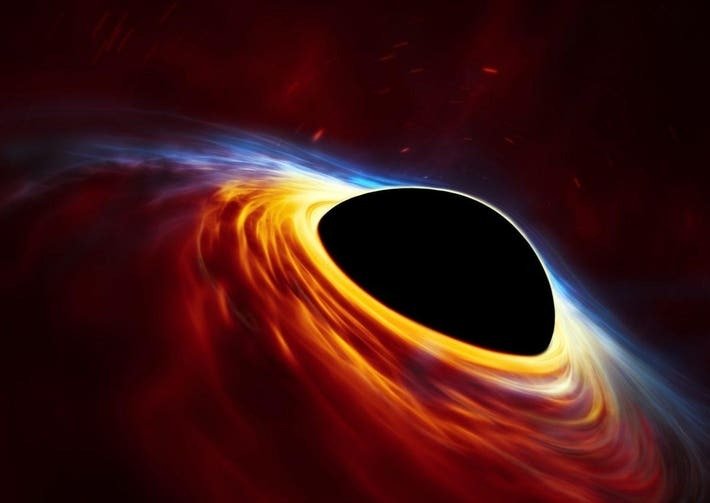
Imagine pressing your ear against the universe and hearing the faint echo of two black holes smashing into each other more than a billion years ago. That is essentially what scientists are doing today. In 2015, after a century of waiting, researchers detected something Albert Einstein had predicted back in 1915 — something he himself thought no one would ever observe: gravitational waves, ripples in the very fabric of space and time. Since that first historic detection, observatories around the world have “heard” nearly a hundred of these cosmic collisions, each one telling a story of violence on an almost unimaginable scale. Gravitational waves have given humanity a brand-new sense — a way to listen to the universe instead of only looking at it. In this article, we will explore what these mysterious waves are, how we manage to detect them, and what they are teaching us about the darkest corners of the cosmos.

To understand gravitational waves, we need to start with Einstein’s general theory of relativity. Einstein proposed that space and time are not separate, fixed backdrops to reality — together they form a single four-dimensional fabric called spacetime. Massive objects, like stars and planets, curve this fabric, and that curvature is what we feel as gravity. Picture a bowling ball resting on a trampoline: it creates a dip, and a marble rolled nearby will curve around it. That, in a nutshell, is gravity.
Now imagine shaking that bowling ball violently — or smashing two of them together. The trampoline would ripple, and those ripples would race outward across its surface. Gravitational waves are exactly that: ripples in spacetime itself, traveling outward at the speed of light, created when truly massive objects accelerate in extreme ways.
Here is the truly mind-bending part: as a gravitational wave passes through you, it briefly stretches space in one direction and squeezes it in another — and then it is gone. You would never notice, because by the time these waves reach Earth from distant galaxies, they are unimaginably faint. A passing wave might change the distance between two points by less than a thousandth of the width of a proton. Detecting that is like measuring the distance to the nearest star with an accuracy finer than a human hair. For a hundred years, it sounded completely impossible.
Not everything in space makes gravitational waves — or at least, not waves we could ever hope to detect. Technically, you generate them too, every time you wave your hand. But the ripples from everyday motion are so absurdly weak that they might as well not exist. Only the most cataclysmic events in the cosmos ring spacetime loudly enough for our instruments to hear.
The loudest sources are pairs of ultra-dense objects spiraling into each other: two black holes merging, or two neutron stars — the collapsed, city-sized corpses of exploded stars — crashing together. As they whirl around each other faster and faster, they churn spacetime like a giant whisk, radiating energy as gravitational waves until they finally collide in a single, stupendous burst.
The numbers involved are staggering. When two black holes merge, they can convert several times the mass of our Sun directly into gravitational-wave energy in a fraction of a second. For that brief moment, the collision outshines every star in the observable universe combined — not in light, since black holes emit none, but in raw gravitational power. Other, quieter sources include stars exploding as supernovae and rapidly spinning neutron stars with tiny surface irregularities, but the great mergers remain the crown jewels of gravitational-wave astronomy.
If gravitational waves stretch space by less than a proton’s width, how on Earth do we measure them? The answer is one of the most precise instruments humans have ever built: the Laser Interferometer Gravitational-Wave Observatory, or LIGO.
LIGO consists of two identical detectors in the United States — one in Washington state and one in Louisiana — each shaped like a giant letter L with arms four kilometers long. Inside each arm, a laser beam bounces back and forth between mirrors hundreds of times. The beams from the two arms are then recombined, and under normal conditions they cancel each other out perfectly. But when a gravitational wave passes, it stretches one arm while squeezing the other, throwing the lasers slightly out of sync and producing a tiny flicker of light. That flicker is the signal.
Building LIGO was an engineering miracle decades in the making. Its mirrors hang isolated from every rumble of the Earth — distant earthquakes, ocean waves, even nearby traffic — suspended on pendulums and springs with active vibration cancellation. The measurements are so fine that LIGO can sense a change in its four-kilometer arms thousands of times smaller than an atomic nucleus.
The payoff arrived on September 14, 2015. Fresh from a major upgrade, LIGO’s detectors caught a clear “chirp” — a signal rising in frequency over two-tenths of a second — from two black holes, 29 and 36 times the mass of the Sun, merging 1.3 billion light-years away. The event, named GW150914, confirmed Einstein’s century-old prediction and earned the 2017 Nobel Prize in Physics. Since then, the Virgo detector in Italy and KAGRA in Japan have joined the hunt, and the network has recorded dozens more cosmic collisions.

The first detection was only the opening note. In 2017, the network heard something even more spectacular: GW170817, the collision of two neutron stars some 130 million light-years away. This time the gravitational-wave chirp was followed by a burst of gamma rays and a glowing afterglow spotted by telescopes worldwide — a kilonova. For the first time, astronomers observed the same cosmic event with both gravitational waves and light, an approach now called multi-messenger astronomy.
That single event solved several mysteries at once. It confirmed that neutron-star mergers forge the heaviest elements in the universe — the gold in your ring and the platinum in a laboratory were likely created in collisions like this one, in the seconds after the stars merged. It also gave scientists a brand-new way to measure how fast the universe is expanding, offering an independent check on one of cosmology’s biggest debates.
Gravitational waves have also revealed a hidden population of black holes. Before LIGO, astronomers knew of only a handful of stellar-mass black holes in our own galaxy. Now the catalog holds dozens of distant mergers, including surprisingly heavy black holes that challenge our theories of how stars live and die. Every detection is a stress test of Einstein’s general relativity in the most extreme conditions imaginable — and so far, Einstein keeps passing.
As remarkable as today’s detectors are, they hear only a narrow slice of the gravitational-wave symphony — the high-pitched chirps of stellar-mass mergers. The next generation of observatories will open entirely new octaves. In space, the planned Laser Interferometer Space Antenna (LISA) will fly three spacecraft in a triangle millions of kilometers wide, listening for the slow, deep rumbles of supermassive black holes merging at the hearts of galaxies.
On the ground, proposed detectors like the Einstein Telescope in Europe and Cosmic Explorer in the United States will be ten times more sensitive than LIGO, catching mergers from the universe’s first generations of stars. Meanwhile, astronomers are already using pulsars — rapidly spinning dead stars that flash like cosmic lighthouses — as a galaxy-sized detector, timing their pulses to catch ultra-low-frequency waves from pairs of giant black holes. Within a decade or two, scientists expect to go from dozens of detections to hundreds of thousands per year: a constant background hum of cosmic collisions.
A century ago, gravitational waves were a mathematical curiosity that even Einstein doubted anyone would ever observe. Today they are a working astronomical tool — a new sense that lets us perceive the universe’s most dramatic moments. Every chirp rolling through LIGO’s detectors is a message from deep space and deep time, reminding us that the cosmos is far more violent, and far more fascinating, than we ever imagined. The universe has been singing in gravitational waves since the beginning. We have only just learned how to listen.